The core idea
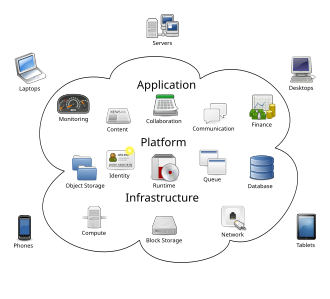
Before cloud, running software meant buying and maintaining physical servers. Cloud replaces owned hardware with rented capacity over the Internet — pay for what you use, scale instantly.
Three service models
- IaaS — raw VMs, storage, networking. You manage OS and up. Example: AWS EC2.
- PaaS — managed runtimes. You manage application and data. Example: Heroku.
- SaaS — complete applications over the web. Example: Gmail, Notion, GitHub.
Key characteristics
- On-demand self-service
- Broad network access
- Resource pooling
- Rapid elasticity
- Measured service (pay-as-you-go)
Major providers
AWS leads market share. Google Cloud leads in data and AI. Microsoft Azure dominates enterprise. Together they hold roughly 65 percent of global cloud spend.
Tradeoffs
Cloud reduces upfront capex but raises ongoing opex at scale. Vendor lock-in, data sovereignty, and latency must be weighed against operational simplicity.