Silo
Technology
The tools that shape the internet.
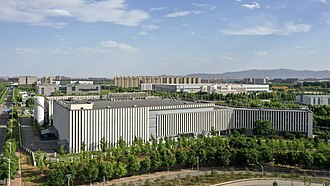 →Data CentersData Centers are specialized physical facilities housing networked computer servers, storage subsystems, power distribution units, and environmental cooling systems that compute, store, and route the global digital economy.
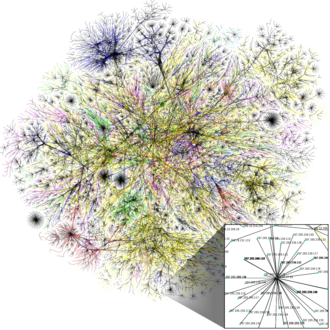 →DNSDNS (Domain Name System) is the Internet phonebook — translating domain names like karadavi.com into IP addresses that computers use to communicate.
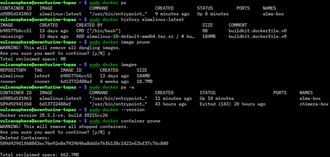 →DockerDocker is a set of products that uses operating system-level virtualization to deliver software in packages called containers. Docker automates the deployment of applications within lightweight containers, enabling them to run consistently across different computing environments.
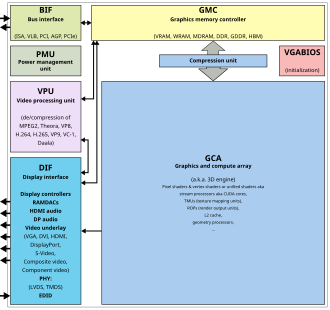 →GPUA graphics processing unit (GPU) is a specialized electronic circuit designed for digital image processing and to accelerate computer graphics, being present either as a component on a discrete graphics card or embedded on motherboards, mobile phones, personal computers, workstations, and game consoles. GPUs are also increasingly being used for artificial intelligence (AI) processing and model training due to linear algebra acceleration, which is also used extensively in graphics processing.
 →GraphQLGraphQL is a data query and manipulation language that allows specifying what data is to be retrieved or modified. A GraphQL server can process a client query using data from separate sources and present the results in a unified graph. The language is not tied to any specific database or storage engine. There are several open-source runtime engines for GraphQL.
 →HTTPHTTP is an application layer protocol in the Internet protocol suite for distributed, collaborative, hypermedia information systems. HTTP is the foundation of data communication for the World Wide Web, where hypertext documents include hyperlinks to other resources that the user can easily access, for example by a mouse click or by tapping the screen in a web browser.
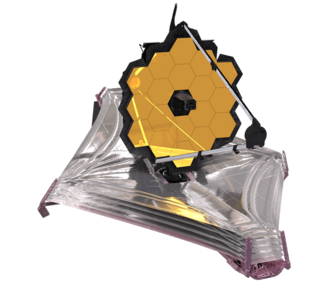 →James Webb Space TelescopeThe James Webb Space Telescope (JWST) is the premier space observatory of NASA, ESA, and CSA, operating at Sun-Earth L2 with a 6.5-meter gold-coated beryllium mirror to observe the earliest galaxies, stellar birthplaces, and exoplanet atmospheres in infrared.
 →JavaScriptJavaScript is the programming language of the Web, running in every modern browser. Via Node.js it powers server-side applications too.
 →KubernetesKubernetes, also known as K8s, is an open-source container orchestration system for automating software deployment, scaling, and management. Originally designed by Google, the project is now maintained by a worldwide community of contributors, and the trademark is held by the Cloud Native Computing Foundation.
 →LinuxLinux is a family of free and open-source software Unix-like operating systems based on the Linux kernel, which was first released on 17 September 1991 by Linus Torvalds. Some members of the family are typically packaged as a distribution, which includes the kernel alongside supporting system software and libraries developed by third parties—such as GNU, Red Hat, and X.Org—to create a complete operating system; however, not all Linux-based operating systems are considered distros, with Android being an example. Linux was originally designed as a clone of Unix and is distributed under the copyleft GPL license.
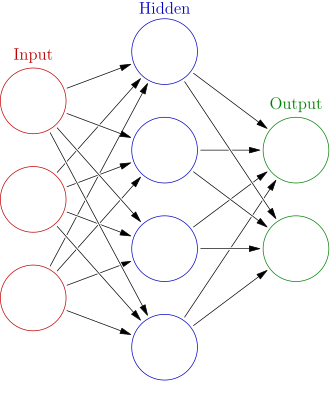 →Neural NetworkIn machine learning, a neural network (NN) or neural net, is a computational model inspired by the structure and functions of biological neural networks.
 →PHPPHP is a general-purpose scripting language geared towards web development. It was created by Danish-Canadian programmer Rasmus Lerdorf in 1993 and released in 1995. The PHP reference implementation is now produced by the PHP Group. PHP was originally an abbreviation of Personal Home Page, but it now stands for the recursive backronym PHP: Hypertext Preprocessor.
 →PostgreSQLPostgreSQL, also known as Postgres, is a free and open-source relational database management system (RDBMS) emphasizing extensibility and SQL compliance. PostgreSQL features transactions with atomicity, consistency, isolation, durability (ACID) properties, automatically updatable views, materialized views, triggers, foreign keys, and stored procedures. It is supported on all major operating systems, including Windows, Linux, macOS, FreeBSD, and OpenBSD, and handles a range of workloads from single machines to data warehouses, data lakes, or web services with many concurrent users.
 →PythonPython is a high-level, general-purpose programming language that emphasizes code readability, simplicity, and ease-of-writing with the use of significant indentation, an extensive ("batteries-included") standard library, and garbage collection. Python supports multiple programming paradigms but with an emphasis on object-oriented programming and dynamic typing.
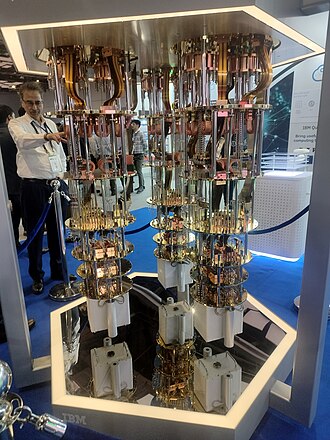 →Quantum ComputingQuantum Computing leverages quantum mechanical phenomena—such as superposition and entanglement—to perform complex calculations exponentially faster than classical computers for specific problem classes.
 →REST APIREST is a software architectural style that was created to describe the design and guide the development of the architecture for the World Wide Web. REST defines a set of constraints for how the architecture of a distributed, Internet-scale hypermedia system, such as the Web, should behave. The REST architectural style emphasizes uniform interfaces, independent deployment of components, the scalability of interactions between them, and creating a layered architecture to promote caching to reduce user-perceived latency, enforce security, and encapsulate legacy systems.
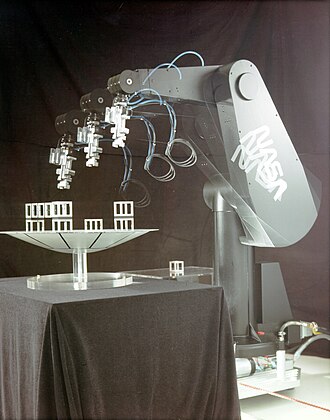 →RoboticsRobotics is an interdisciplinary branch of engineering and computer science that involves the design, construction, operation, and application of autonomous and programmable robots.
 →RustRust is a general-purpose programming language that emphasizes performance, type safety, concurrency, and memory safety.
 →SemiconductorsSemiconductors are materials with electrical conductivity intermediate between conductors and insulators, serving as the foundational physical substrate of all modern computing chips.
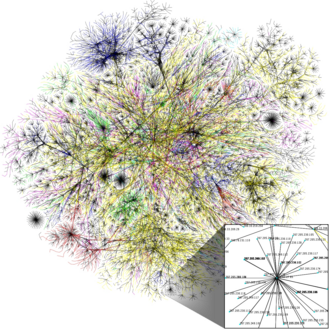 →TCP/IPTCP/IP is the foundational protocol suite of the Internet. TCP provides reliable ordered delivery; IP handles addressing and routing of packets.
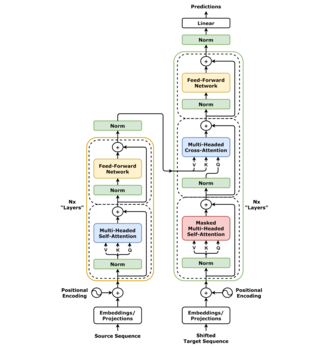 →TransformerIn deep learning, the transformer is a family of artificial neural network architectures based on the multi-head attention mechanism, in which input data such as text, images, or audio, is converted to a sequence of numerical representations called tokens, and each token is converted into a vector via lookup from a word embedding table. At each layer, each token is then contextualized within the scope of the context window with other (unmasked) tokens via a parallel multi-head attention mechanism, allowing the signal for key tokens to be amplified and less important tokens to be diminished. Because self-attention alone is permutation-invariant, transformers inject positional information, typically through positional encodings or learned positional embeddings, so token order can affect the output.
 →TypeScriptTypeScript (TS) is a high-level programming language that adds static typing with optional type annotations to JavaScript. It is designed for developing large applications. It transpiles to JavaScript. It is developed by Microsoft as free and open-source software released under an Apache License 2.0.
 →UPIUnified Payments Interface (UPI) is an instant payment architecture developed by NPCI that enables real-time mobile interbank messaging and fund transfers via virtual identifiers, settling through RBI net settlement cycles.