Silo
Concepts
Ideas worth understanding.
 →APIAn API (Application Programming Interface) is a contract defining how software components communicate. REST, GraphQL, and gRPC are the dominant styles on the modern web.
 →Artemis ProgramThe Artemis program is a Moon exploration program led by the United States' National Aeronautics and Space Administration (NASA), aimed at returning humans to the Moon for the first time since the Apollo program and building a permanent lunar base. It was formally established via Space Policy Directive-1 in 2017 by President Donald Trump.
 →Artificial IntelligenceArtificial Intelligence is the field of computer science dedicated to developing computational systems that perform tasks requiring human-like cognitive capabilities, including reasoning, pattern recognition, learning, and natural language understanding.
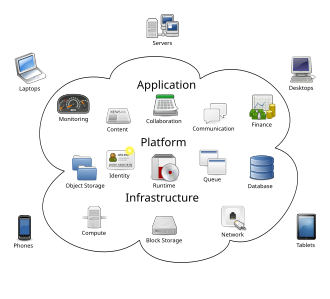 →Cloud ComputingCloud Computing is the on-demand delivery of computing power, database storage, applications, and IT resources over the internet with pay-as-you-go pricing.
 →CPUA CPU (Central Processing Unit) executes program instructions through the fetch-decode-execute cycle. Modern CPUs contain billions of transistors and many parallel cores.
 →CybersecurityCybersecurity is the practice of protecting computer systems, networks, devices, and data from unauthorized digital attacks, damage, or unauthorized access.
 →DatabaseA database is an organised collection of structured data managed by a DBMS, supporting create, read, update, and delete operations reliably.
 →DemocracyDemocracy is a system of government where power is vested in the people, who rule either directly or through freely elected representatives under the rule of law and constitutional protections.
 →Digital Public InfrastructureDigital Public Infrastructure (DPI) refers to digital foundational systems—such as digital identity, payment rails, and consent-based data exchange—built as open public goods to enable inclusive economic growth.
 →Generative AIGenerative Artificial Intelligence refers to systems capable of generating text, images, audio, video, or synthetic data in response to natural language prompts.
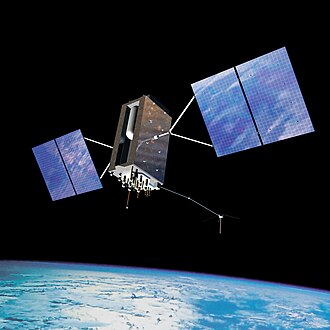 →Global Positioning System (GPS)The Global Positioning System (GPS) is a satellite-based radionavigation system owned by the United States government and operated by the United States Space Force, calculating exact coordinates via atomic clock trilateration.
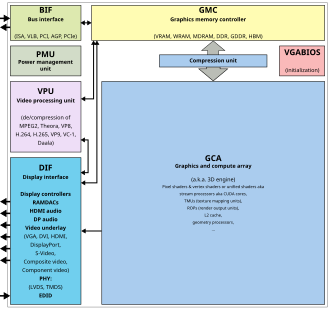
 →GPU ComputingGeneral-purpose computing on graphics processing units is the use of a graphics processing unit (GPU), which typically handles computation only for computer graphics, to perform computation in applications traditionally handled by the central processing unit (CPU). The use of multiple video cards in one computer, or large numbers of graphics chips, further parallelizes the already parallel nature of graphics processing.
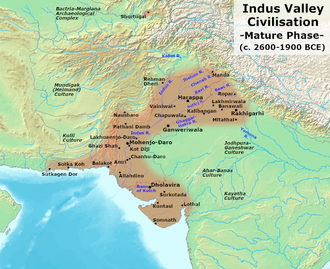 →Indus Valley CivilizationThe Indus Valley Civilization (c. 3300–1300 BCE) was a Bronze Age civilization in South Asia, celebrated for its sophisticated urban planning, brick architecture, drainage systems, and standardized weights.
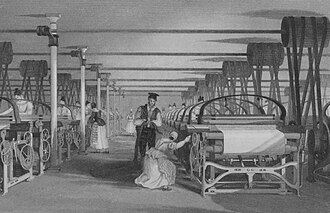 →Industrial RevolutionThe Industrial Revolution was the transition to new manufacturing processes in Great Britain, continental Europe, and the United States, transitioning from agrarian economies to machine-driven industrial production.
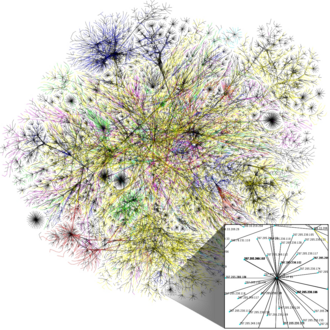 →InternetThe Internet is the global system of interconnected computer networks that uses the Internet protocol suite (TCP/IP) to communicate between networks and devices. It is a network of networks that comprises private, public, academic, business, and government networks of local to global scope, linked by electronic, wireless, and optical networking technologies. The Internet carries a vast range of information services and resources, such as the interlinked hypertext documents and applications of the World Wide Web (WWW), electronic mail, discussion groups, internet telephony, streaming media and file sharing.
 →Large Language ModelsLarge Language Models (LLMs) are deep neural network models with billions to trillions of parameters trained on vast text corpora using self-attention mechanisms to perform natural language understanding, generation, and complex reasoning.
 →Machine LearningMachine Learning is a core branch of artificial intelligence focused on mathematical algorithms that automatically discover patterns from data and improve their predictive accuracy through experience.
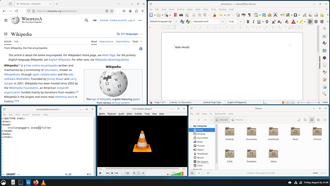 →Open SourceOpen-source software (OSS) is computer software whose source code is publicly available, allowing users to use, study, modify, and distribute it — in contrast with proprietary (closed-source) software. These abilities are typically granted through open licenses or, more rarely, by dedication to the public domain. The development of open-source software can be based on open collaboration, a decentralized model of production. It is commonly defined according to the Open Source Definition of the Open Source Initiative, but the precise meaning of open source remains a source of conflicts.
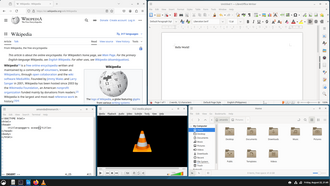 →Open Source SoftwareOpen Source Software is computer software released under a license where the copyright holder grants users the rights to inspect, modify, and distribute its source code.
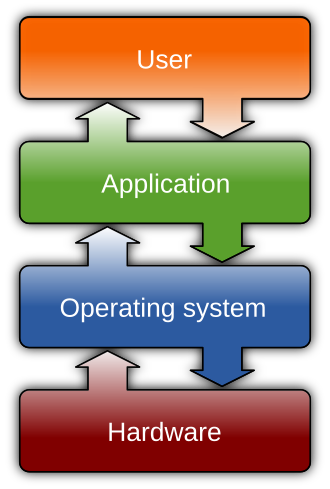
 →Operating SystemAn operating system is system software managing hardware resources and providing services for programs. It sits between hardware and user-facing applications.
 →Programming LanguageA programming language is a formal system for giving instructions to a computer, defining syntax and semantics that produce executable programs.
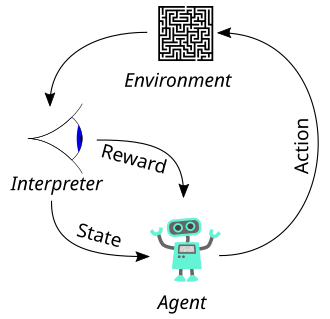 →Reinforcement LearningIn machine learning and optimal control, reinforcement learning (RL) is concerned with how an intelligent agent should take actions in a dynamic environment in order to maximize a reward signal. Reinforcement learning is one of the three basic machine learning paradigms, alongside supervised learning and unsupervised learning.
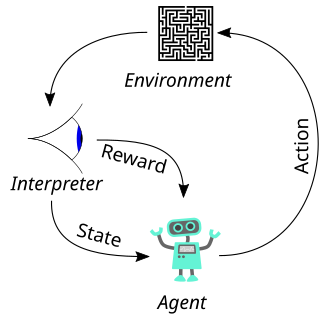 →RLHFRLHF (Reinforcement Learning from Human Feedback) aligns LLMs with human preferences. Human raters rank outputs, training a reward model used to fine-tune the LLM to be helpful and safe.
 →Scientific MethodThe Scientific Method is an empirical process of acquiring verified knowledge through systematic observation, rigorous measurement, testable hypothesis generation, and experimental reproducibility.
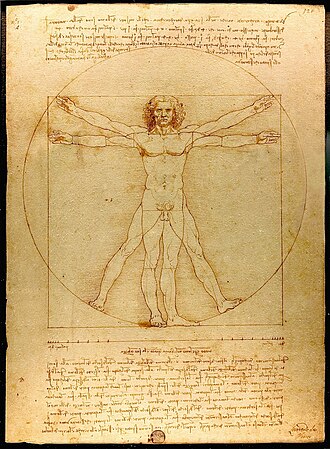 →The RenaissanceThe Renaissance was a fervent period of European cultural, artistic, political, and economic 'rebirth' following the Middle Ages, marked by humanism, empirical observation, and scientific revolution.
 →World Wide WebThe World Wide Web is an open-standard information system that enables documents and digital resources to be identified by URLs, interconnected by hypertext links, and transferred over the global Internet via HTTP.